
Five teams building the same agent

Each business unit reinvents extraction logic, approval routing, and HITL handling from scratch, with no shared library and no awareness the other four exist.
Five business units, five near-identical agents, five different models, five different security reviews, zero reuse. And every one of them stuck in the same queue, waiting on the same handful of overstretched AI engineers. That's not innovation. It's shadow AI with better branding, bottlenecked by a team that can't scale.
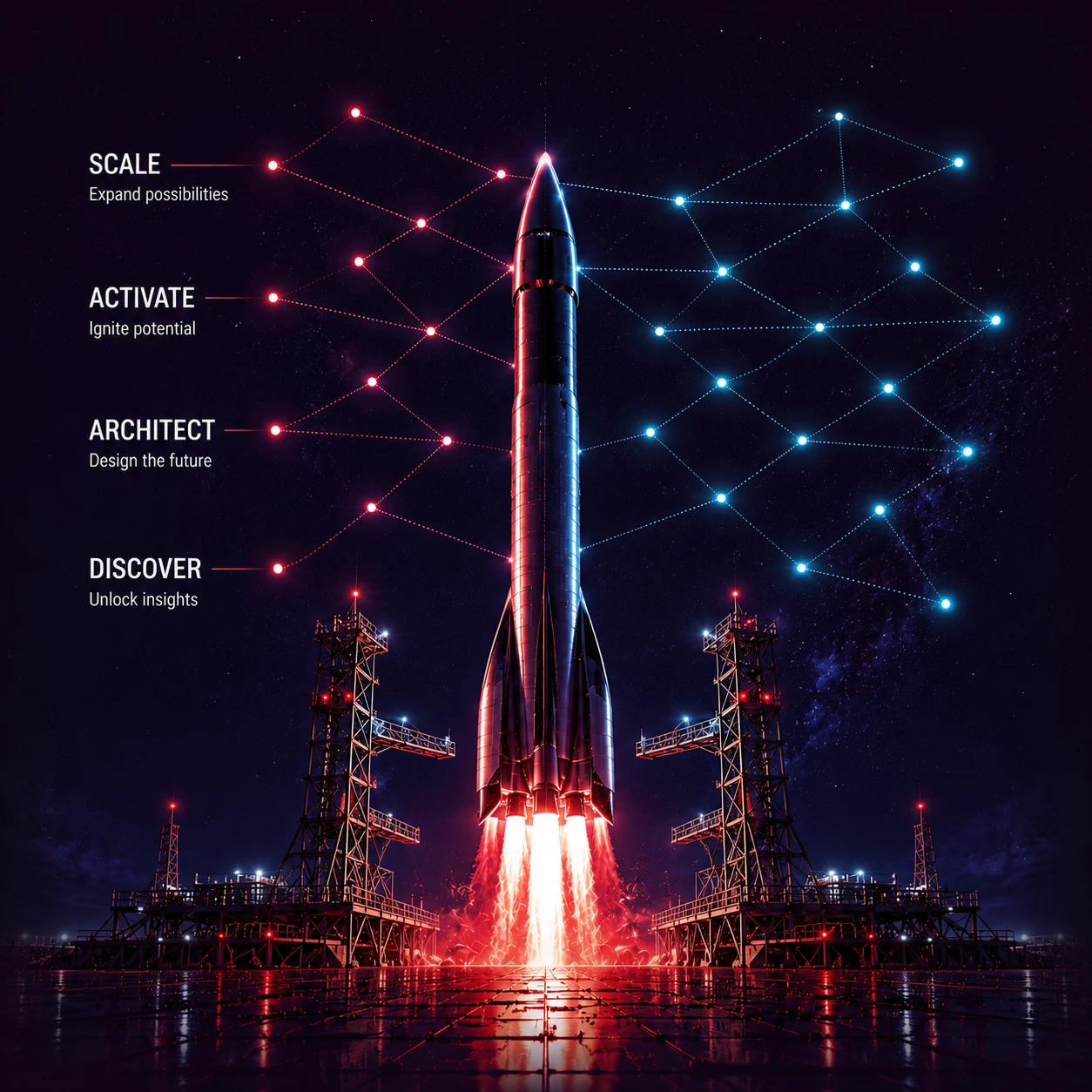
This is the pattern across almost every enterprise moving fast on AI: pilots multiply, none of them talk to each other, and nobody can tell you with confidence what's running in production right now.
These aren't features. They're the structural reasons a platform approach beats a thousand disconnected prototypes, for the business, for engineering, and for whoever has to answer for it in an audit.
Ready to see your first agent live in weeks, not months?
Bring your use case. We return an architecture, a coverage check, and a cost estimate. Same session.
Where the Launchpad shows up in delivery: solution design, component reuse, and the time teams spend looking for what already exists.
Accelerate requirements-to-architecture planning from days to under 90 minutes with guided interviews and automated workflow generation.
Reduce new agent solution design time through AI-assisted requirement gathering, architecture planning, and reusable agent patterns.
Increase reuse of proven agent components, minimizing duplicate development effort across projects.
Reduce time spent discovering and reusing existing enterprise solutions using a centralized searchable agent catalog.
Reduce implementation effort by reusing standardized agent workflows and capabilities, avoiding weeks of rebuilding common functionality.
Generate deployment-ready project scaffolds within hours, significantly reducing time-to-prototype and repository project setup.
Reduce incorrect agent selection and workflow design through automated capability matching and architecture validation.
Protect reusable enterprise agent components during code generation, ensuring standardized assets remain unchanged while generating project-specific code.
From AI ambition to live production agent in weeks. Not quarters.
The Agentic AI Launchpad is a reusable enterprise AI platform that accelerates the design, deployment, governance, and scaling of operational-grade AI agents. It does not ask your team to start from a blank canvas.
It gives them a working foundation: 30+ battle-tested agent components, a live visual build environment, and governance wired in at every layer.
Book a Discovery SessionFrom the first plain-English description of a problem to a governed, production-grade agent. All without leaving the platform.

Users describe their business problem in plain English through a guided interface. No technical specification required to get started.

The platform converts the input instantly into an interactive, non-linear business flow diagram. Business users can see the entire logic, validate it, and modify it. All before a single line of code is committed.

As the blueprint takes shape, visual nodes highlight which agents are catalog-ready and reusable, and which need to be built from scratch. Teams know exactly what they are inheriting before the project starts.

Supports multiple large language models running simultaneously for complex problem types. Database connectivity runs through MCP, linking to multiple sources in parallel.

Integrates directly with your Git repositories. Pulls existing agent codebases, combines them, and deploys a new application automatically, from code to running system, without manual assembly.

Custom and pre-built agents connect through ACP, giving developers a consistent, friction-free build experience regardless of how many agents are involved in a given workflow.

An Eval Agent runs continuously, in real time and in batch, validating correctness, responsibility, and guardrail compliance at every step. Governance is not a final checkpoint. It runs throughout.
6 screens from a live deployment. Every principle above is something you can click on: named agents, real accuracy metrics, governance wired in at every step.
Each layer is independently composable. Add an orchestration layer without rebuilding the knowledge layer. Swap a connector without touching agent logic.
End Solution at top · Foundation at base · Each layer independently composable
The first agent costs the most. Every subsequent agent becomes faster to deploy, more cost-efficient, and easier to scale. The architecture is already there.
“Define the target before building the weapon.”
Each phase compounds. The first agent costs the most; the architecture carries the rest.
Not a better way to build agents. A fundamentally different starting point.
Every team starts from a blank repository, regardless of how many similar agents already exist elsewhere in the org
Every build starts with a coverage check against 60–65 certified modules already proven in production
Model and library choice is left to individual engineers, with no enforced standard and no visibility for security
Approved models and libraries are enforced at the architecture level, not a policy anyone needs to remember
Knowledge of what worked leaves with the person who built it. No versioning, no benchmark record.
Every successful build becomes a versioned, benchmarked module the next team can reuse directly
Business users wait weeks for a spec to be translated into something engineering can build
The process owner describes the problem conversationally and gets an architecture back the same session
Governance is retrofitted after the fact, usually after an incident or an audit finding
Drift detection, audit logs, and HITL controls are inherited automatically by every new agent
Cost and ROI are estimated after the build, not before it starts
Coverage, cost, and accuracy are visible before a single line of architecture is committed
Purpose-built agent templates for your sector, deployed in weeks, not quarters.



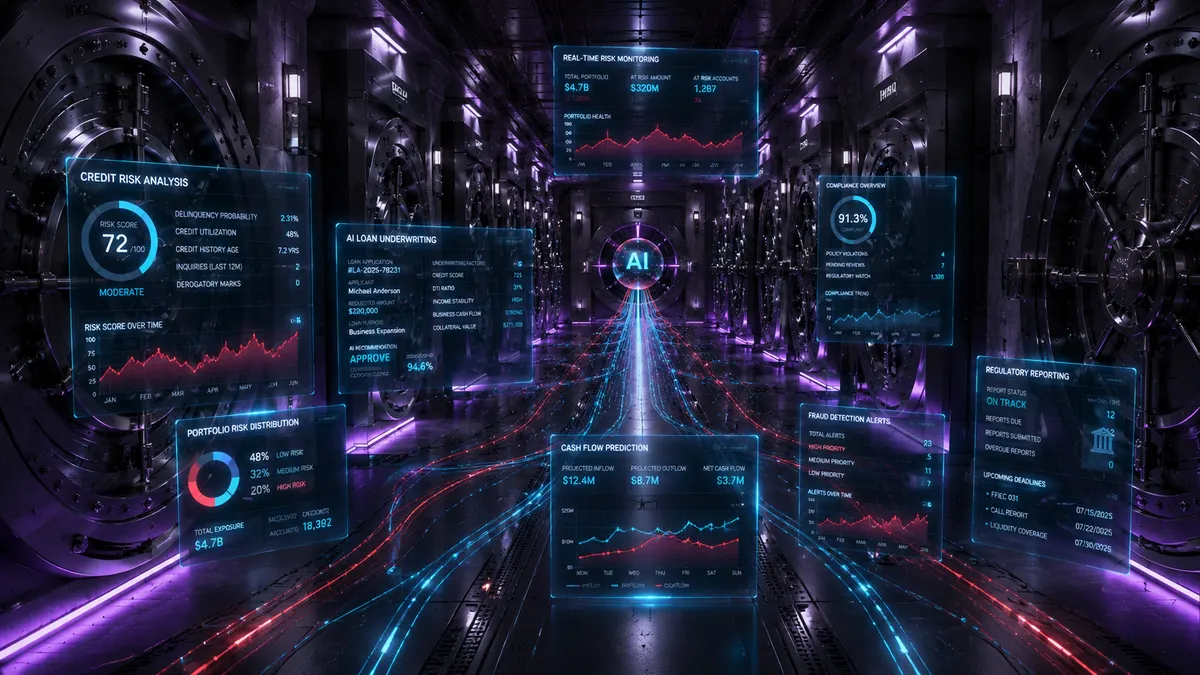
Every result below came from a platform build. The modules that delivered it are in the catalog, ready for the next team.
“The first agent costs the most. Every one after should cost less, because the knowledge of how to build it has already been certified and stored, not locked in one engineer's head.”
A finance team’s manual extraction workload, handed to a governed agent.
Merchandising audits that used to take days now run in minutes.
First-draft quality lifted cycle over cycle, then captured for reuse.


