
Agentic Storefront in a Box
AI assistants are now shopping on behalf of your customers. If you run your own storefront, two things decide the outcome: whether you appear at all, and whether what the agent reads about your products is accurate when it checks. Four gated phases, starting with a readiness diagnostic, each one proving out before the next begins.
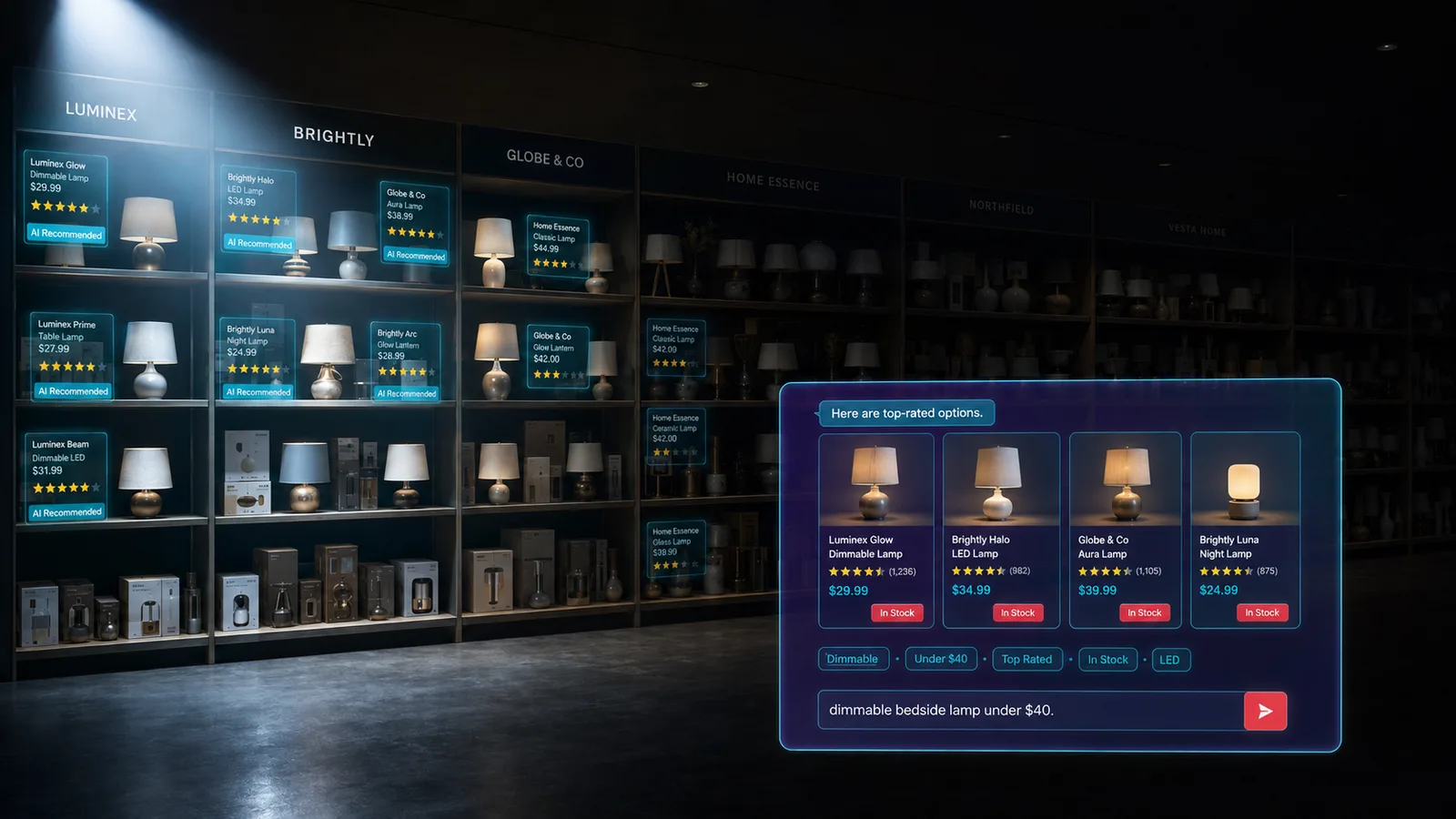
- Microsoft CopilotIn-assistant checkout live in the US since January 2026
- Google AI Mode & GeminiMerchant feeds power AI shopping; agentic checkout live with select US merchants
- OpenAI ChatGPTDiscovery at scale; buying moved into retailer-run apps during 2026
- Anthropic ClaudeResearch and discovery surface; appearing at all depends on admitting its crawler
A new customer is shopping your category. Your store is not in the results.
An AI agent shopping for a human doesn’t look at your website. It reads product data. Most retailers leak this new demand at seven points. Each one is silent, and each one is fixable.
This hits hardest if your storefront is yours to control. Retailers with enterprise-scale engineering teams are often already solving it in-house. If you own your commerce stack and your catalog, but do not yet have anyone whose job is agent visibility, you are the most exposed, and the quickest to fix.

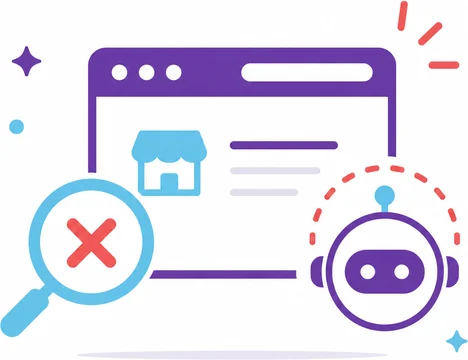
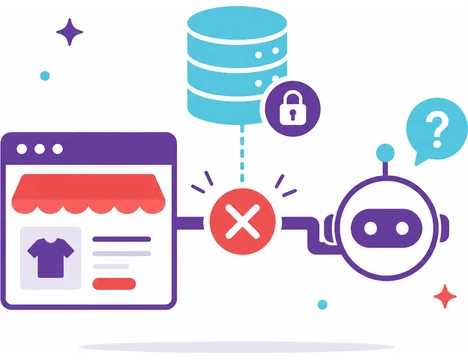
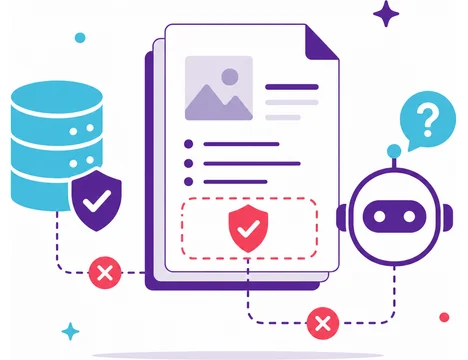
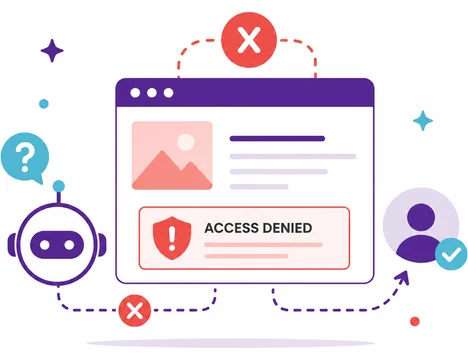
Four phases. Each one gated and provable.
No phase starts until the one before it clears a stated signal, so you are never funding the next build on faith. Getting found comes first, then being accurate once you are: Distribute runs alongside Optimize, so you are visible in AI recommendations while the catalog work is still under way.

Diagnose
“How ready are you for agents today?”
We shop your store the way AI agents do, simulating the assistant crawlers against your live site, then score three layers: can agents get in, can they read your catalog, and do they actually recommend you. You get the score and the fix list before you spend anything on builds.
- Four sub-scores: Agent Access, Catalog Readiness, AI Discoverability, Directory Presence
- Composite Readiness Index
- MCP / ACP / UCP endpoint detection
- Competitive visibility snapshot against two to three rivals
- Prioritized fix list, tiered: days / weeks / roadmap
- One-page executive scorecard plus findings appendix

- Python
- Playwright
- Scrapy
- robots.txt parser
- Azure OpenAI
- Claude API
- schema.org / JSON-LD validator
- Merchant Center feed validator
- Fabric OneLake
Illustrative business case — a $200M online retailer
You find out exactly where you stand before funding a single build. And the catalog work underneath it lifts your organic search, your on-site search, and your marketplace listings anyway. The same clean product data feeds all four.
Year-one economics
Illustrative, tuned to your actual numbers during the Phase 1 Readiness Assessment. Margins vary widely by category, so yours replace these. Excludes the on-site conversion lift from Phase 3, which often pays for the program alone.
Four retail categories where agents are already deciding
The mechanics are the same everywhere. What changes is which part of your data the agent leans on hardest to make the call.

Fashion & Apparel
"Business casual shoes for spring" is a query keyword search handles badly and an assistant handles well. Colour, size and fit data decide whether the agent can shortlist you at all.

CPG & Grocery
Repeat household purchases mean repeat agent queries, so visibility compounds fastest here. Loyalty terms the agent can read are what move basket size.

Home & Specialty
Furniture, decor and tools are research-heavy, and the agent does that research for the shopper. Traffic arrives with the comparison already done.

Luxury & Premium
Merchant-of-record control matters most where the brand experience is the product. Capture agent demand without handing over the customer relationship.
A new channel, without giving up the customer
The reason retailers hesitate on agent commerce is not the technology. It is the fear of handing the customer relationship to a platform. This program is built so that never happens.
You own the data. You stay merchant of record.
Your customer data stays yours. Affine never stores, sells, or resells it. You control fulfilment and the customer relationship. The sale, the data, and the customer remain yours.
Card data never lands in your stack.
A purchase approved inside the assistant arrives as a secure one-time token through your existing PCI-compliant processor. Your systems never see raw payment details.
Auditable by design.
GDPR-ready handling, and every agent query, recommendation and attribution decision is logged. You can show exactly how the assistants saw your catalog in any given week.
Works with the stack you already run.
Major commerce platforms and custom storefronts alike. This is integration on top of your existing systems: no migration, no replatform, no lock-in.
Four things no other provider combines
Proprietary IP inside
IntelliTag reads product images and specs. The engine that makes catalogs machine-readable is ours, proven at 90%+ accuracy.
The truth guarantee
Every product claim traces to verified evidence. We win by being the clearest truth-teller, never by exaggerating. Agents remember liars.
One loop, one partner
Others sell monitoring or data tools or integration. We see, fix, sell, and prove in one closed loop that compounds weekly.
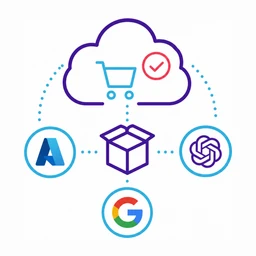
Runs on your cloud
Deployed into the cloud environment your team already runs, not a migration to ours. Co-sell ready through the major marketplaces, and portable across the assistant surfaces your customers actually use.
Will this work for us?
It is built for retailers who run their own commerce stack and own their catalog, but do not yet have anyone dedicated to agent visibility. If you are on a fully hosted all-in-one platform, some of this is handled for you at the platform level. If you are a large enterprise retailer with in-house AI and engineering teams, you may already be building it. Between those two is where this program does the most work, and where Phase 1 will tell you in two to three weeks whether there is a real gap.
No. The program works on major commerce platforms, enterprise systems, and custom storefronts. Platforms with native APIs onboard fastest because less integration work is needed; everywhere else we handle that work in Phase 2. Your platform choice changes the timeline, not the outcome.
Technically yes. You would need to build product-data parsing, integrate the assistant platform APIs, run continuous visibility audits, and keep an optimisation loop running. The catalog enrichment engine is the hard part, and Affine IntelliTag is already built and in production. Most retailers find the partnered route faster and lower risk.
You own it. Affine operates as a service layer, not a data hub. You remain merchant of record, so the customer relationship is yours. We work from aggregated visibility and attribution metrics, not raw customer records.
Visibility comes first. Phase 4 puts you into the AI shopping directories while Phase 3 is still enriching the catalog, so appearance in AI recommendations becomes measurable before the catalog work is finished. How fast it builds from there depends on your category, your starting data quality, and how contested your vertical already is.
No. Agent shopping is an additional channel, not a replacement. Your website, app, and marketplace listings are untouched. The Phase 3 catalog work runs the other way: the same enriched product data improves organic search, marketplace visibility, and your own on-site search at the same time.
The Phase 2 and Phase 3 foundation still pays back. Complete, verified, machine-readable product data improves organic search, on-site search conversion, and marketplace performance regardless of how large the agent channel becomes. That is the reason the program starts with access and catalog work rather than with the checkout integration.
Yes. Phase 1, the readiness diagnostic, runs at no or low cost and commits you to nothing further - it exists to establish whether you have a real visibility gap. Phases 2 and 3 are scoped as projects, each gated on a stated signal before the next begins. The Share-of-Agent dashboard from Phase 4 runs as a subscription you can pause. There is no lock-in and no exit penalty.
Phase 4 is the measurement engine. It records how often the assistants recommended you against the competitors you name, and why you lost the ones you lost. Every phase also carries a published Go / No-Go signal, so you have a defensible read on whether the strategy is working before you fund the next stage of it.